-
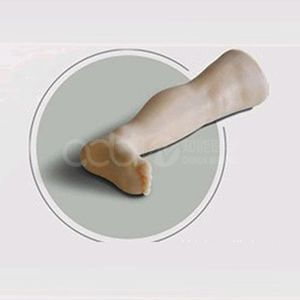
The significance of the diabetic foot care model
The diabetic foot care model is a teaching tool specifically designed for training in the prevention and care skills of diabetic foot. By simulating the structure of the foot, the texture of the skin, and common lesion manifestations, it enables learners to have an intuitive understanding of the anatomical characteristics and pathological changes of diabetic foot. The model can present typical scenarios such as foot ulcers,...
-
The function of the advanced low-position bandaging model
The advanced low-position bandaging model provides learners with a safe and repeatable bandaging practice environment through highly simulated lower limb or local tissue structures, and it is an important auxiliary tool in clinical teaching and skills training. The surface material of the model has the touch and elasticity of real skin, allowing students to accurately...
-
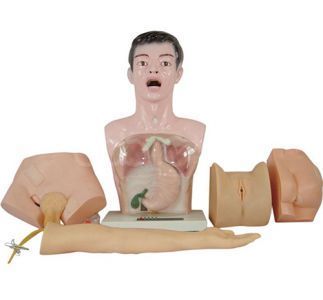
The advantages of advanced trauma assessment models
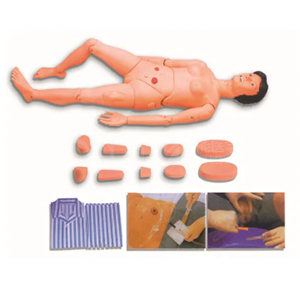
Advanced trauma assessment models feature highly realistic human body structures and multi-site trauma scenarios, capable of comprehensively simulating various trauma manifestations such as bleeding, fractures, open wounds, and pneumothorax. They are essential equipment for first aid and trauma teaching. Its advantages are first reflected in its high realism, with distinct layers of skin texture and soft and hard tissues, e...
-
The significance of the head acupuncture model
The head acupuncture model is made based on the distribution of meridians and acupoints in the head. It is an indispensable tool in head acupuncture teaching and clinical training and holds significant importance.
Firstly, the model clearly presents the commonly used acupoints on the head and their corresponding zones, such as Baihui, Yintang, Taiyang, etc., ena...
-
The significance of the tracheotomy care model for infants and young children
The significance of the infant and toddler tracheotomy care model lies in providing medical staff with a safe, realistic and repeatable professional training platform, enabling trainees to master the key skills of tracheotomy care without harming the children patients.
The model is designed...
-
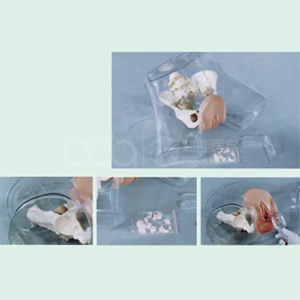
Hip Joint Model - Q&A Section
Question: What structures are mainly displayed in the hip joint model?
Answer: Hip joint models typically present the acetabulum, femoral head, joint capsule, ligaments and cartilage structures, truly reproducing the ball-socket connection form of the joint, facilitating the observation of its stability and movement trajectory.
The function of the outer jacket for forearm venipuncture
The forearm venipuncture jacket is mainly used by medical staff and trainees for practical and proficient operation in venipuncture skills training. This coat is designed based on the anatomical structure of the forearm and is equipped with reusable venous conduits. It can realistically simulate the tactile sensation, reflux and puncture resistance of veins, allowing trainees to repeatedly practice positioning, needle Angle...
Sewing Practice Model (with base)
The suturing practice model with base is a teaching tool specifically designed for surgical suturing and suture needle operation training. By simulating skin texture and tissue layers, it enables learners to repeatedly practice suturing techniques in a safe environment. The attached base design ensures the model is fixed and stable, facilitating desktop operation and ...
The purpose of training the electronic human tracheal intubation model
The electronic human tracheal intubation training model is designed to provide a safe, controllable and realistic airway management practice environment for medical students, anesthesiologists and emergency medical training personnel.
The model adopts a simulated head and neck structure, featuring key anatomical landmarks such as the oral cavity, pharynx, glotti...
The purpose of the dog body acupuncture model
The main purpose of the dog body acupuncture model is to be used for veterinary acupuncture teaching, clinical training and popular science demonstration, providing learners with a safe and repeatable training tool. The model is made based on the real structure of a dog, marking the main meridian directions and the locations of commonly used acupoints, such as Baihui, Ganshu, Shenshu, Weizhong, etc., enabling learners to in...
Pediatric nasogastric tube Model - Q&A Section
Question: For what kinds of training is the pediatric nasogastric tube model mainly used?
Answer: This model is used to train basic skills such as the correct placement, fixation, retraction of gastric contents, injection of nutrient solution, and tube care of nasogastric tubes, helping learners become familiar with the operation process of pediatric nasog...
Color skull model
The colored skull model is an intuitive tool used for anatomy teaching and clinical demonstration. It distinguishes the structures of various bone blocks of the skull, such as the frontal bone, parietal bone, temporal bone, sphenoid bone, occipital bone, and maxilla and mandible, through different colors, enabling learners to more easily identify the positions and interconnections of the bones. Models are usually made to re...