-
How can the phlebotomy model help medical professionals face complex cases?
Venotomy is a common technique used in emergency treatment, especially in cases of severe trauma, shock, or other critical situations, it is essential to be able to quickly establish venous access. However, in some complex cases, the identification and operation of veins is often difficult, especially in elderly patients, patients with severe dehydration, or patients with special body size. It has become a key issue in emer...
-
Can the PICC interventional training model help participants cope with various clinical complications?
Peripheral catheterization central venous catheter (PICC) is a common and important technique in medical interventional therapy, widely used in long-term drug infusion and hemodialysis. However, there is a certain risk of complications during PICC catheterization, such as pneumothorax, thrombosis, and improper catheter placement. Therefore, medical students must have sufficient technical proficiency and the ability to deal ...
-
Can the venipuncture model reduce the technical difficulties encountered in practical clinical practice?
Venipentesis is one of the common but technically demanding operations in medicine, especially in emergency care, intensive care and long-term treatment, and precise operation is directly related to patient comfort and treatment effect. Venipunction model, as an important training tool, is being widely used in medical education to help medical students and clinical staff master this skill, reduce the occurrence of technical...
-
Can advanced trauma models effectively reduce medical errors in clinical trauma emergency care?
In the first aid scene, trauma patients often face life-threatening situations, and the timely response and accurate operation of medical personnel are crucial. However, when performing trauma first aid under pressure, operational errors and errors in judgment are risks that cannot be ignored. In order to help medical personnel improve their first aid skills, advanced trauma model, as a highly simulated training tool, has bec...
-
Can the gender trunk model make up for the limitations of the traditional model?
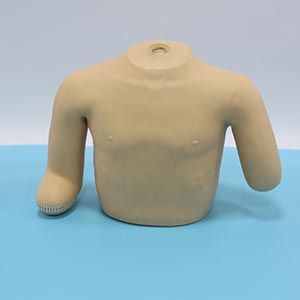
With the continuous development of medical education and clinical practice, the traditional anatomy teaching model has gradually exposed some limitations, especially in the education of gender differences. Traditional models mostly use single-sex torso, usually dominated by male models, which to some extent ignores the differences in anatomical structure and physiological function between men and women. In recent years, the...
-
Can pediatric bone puncture models effectively reduce actual clinical errors?
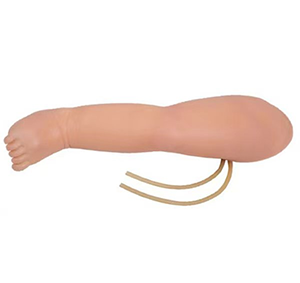
Bone puncture is a difficult medical technique, especially in children. Due to the small bones and poor tolerance of children, a little careless operation may lead to complications or failure. However, by using the pediatric bone puncture model for simulation training, healthcare professionals have the opportunity to improve their skills in non-clinical Settings, thereby reducing the rate of operational error in real-world ...
-
Can kidney models help medical students acquire clinical skills faster?
In medical education, kidney anatomy model, as a teaching tool, has been widely used in various teaching links. Especially for medical students, kidney model is not only a bridge to learn basic anatomy, but also the key to master clinical skills and improve academic ability. Through the application of the model, students can more effectively understand the structure and function of the kidney, improve the proficiency of ...
-
Advanced High level Bandaging model: Can it improve the emergency rescue ability of medical personnel?
With the improvement of medical emergency training requirements, professional equipment plays an increasingly prominent role in education and practice. In an emergency, efficient and accurate dressing skills can be the key to saving lives. Especially in the treatment of trauma, the correct high level dressing technology is not only related to the life safety of the injured, but also directly affects the efficiency of first ai...
-
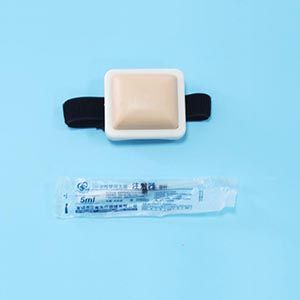
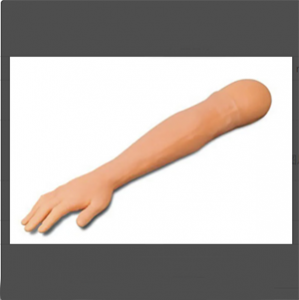
What are the advantages of forearm venipuncture jackets over traditional training methods?
Venipuncture is one of the most basic and common procedures in medical care. However, for medical students and novices, mastering this skill is not easy. Traditional training methods usually rely on classroom theory explanation, video demonstration and practical exercises, but due to the risk of real patient participation and limited resources, it is often difficult for students to get enough practice opportunities. In this...
-
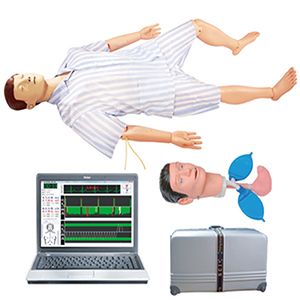
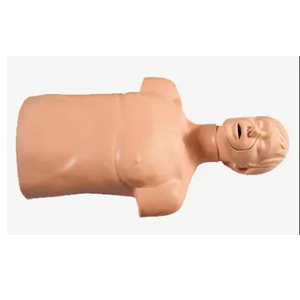
Why is the CPR simulator more than just a training tool?
Half-body cardiopulmonary resuscitation simulator (hereinafter referred to as "half-body simulator") has been widely used in medical emergency training in recent years. It is not only an effective tool for improving cardiopulmonary resuscitation (CPR) skills, but also a catalyst for first aid education, research and technological innovation. For medical students, understanding the multiple functions and values behin...
-
Why is the head acupuncture model a key tool in acupuncture learning?
Head acupuncture is a traditional Chinese medicine treatment that treats various diseases by inserting needles into specific areas of the head. It is widely used to treat neurological diseases, headaches, insomnia, emotional problems and so on. For students of head acupuncture and doctors engaged in head treatment, understanding its complex distribution of meridians and points is crucial. The head acupuncture model, as a te...
-
The key function and function of femoral vein puncture model
Femoral Venipuncture is an important clinical procedure, often used in emergency care, critical care, and clinical diagnosis. Femoral venipuncture models, as training tools in medical education, can help students and medical professionals master this skill. By simulating realistic anatomical structures and clinical situations, the training model can significantly improve the trainees' op...